


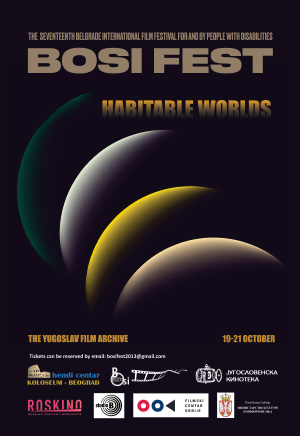
Workshop as part of the BOSIFEST Film Festival 2026
Virtual reality and film: who can enter the picture When you put on the VR glasses, the film is no longer something you watch from the seat in front of the screen. You immerse yourself in the image. That change opens up a question that the film industry is just starting to seriously ask: who can get into the picture and who has the opportunity to build it? In our VR studio, it can be seen very simply. Several people with glasses work in the same space, each in their own virtual environment, while those without glasses follow only what is shown on the screen. It is precisely from such situations that this lecture arises: the moving image and virtual reality can change the way we think about disability, both on the screen and behind the camera.
VR can convey the experience of space, sound and movement in a way that film could not, but only if it is developed together with people who live such experiences every day. At the same time, these technologies become a useful tool for work: recording and editing with head movement or voice, remote rehearsals and collaboration, subtitles and audio descriptions that are part of the design from the beginning, not an afterthought. But VR isn't accessible by itself either, and that's why accessibility has to be built in from day one.
People with disabilities should be equal authors, directors, designers and collaborators, not just subjects or audiences. Examples already exist. Notes on Blindness was created from the sound diaries of a writer who lost his sight and shows how much sound can carry an image. Cripping Up plays with that very misunderstanding: what happens when an audience, accustomed to tasting someone else's body through VR, realizes that empathy is not the same as experience. On the other hand, the film 4 Feet: Blind Date deals with disability and sexuality, a topic that VR films rarely touch upon.
On the mentioned examples, I will show what is already working and what is still missing. I will try to bring closer the possibilities provided within VR and possible further steps that festivals, producers and film academies can take, so that everyone can participate in the creation of the image, and not just watch it.
Prof. dr Predrag Terzić
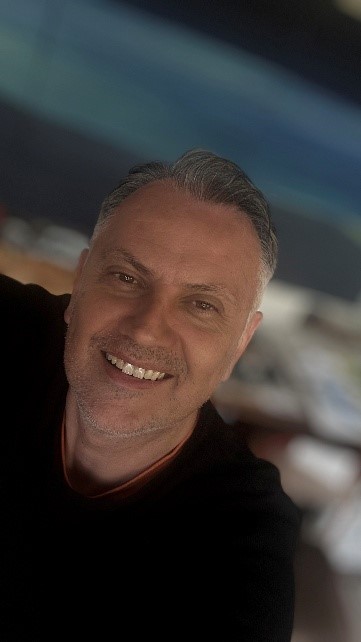 Born in Belgrade in 1972.
Graduated from the Belgrade Faculty of Fine Arts, Department of Painting in 2000, Professor Čedomir Vasić’s class. Master’s degree at the same Academy. In 2001. Members of the Association of Fine Artists of Serbia ( ULUS ). He obteined his PhD degree in the Interdisciplinary Studies of Theory of Art and Media, under the mentorship of Professor Divna Vuksanović, PhD, at the University of Arts, Belgrade. After attaining his Master’s degree he starts to exhibit intensively, in the country and abroad. His works are a part of several private collections in the country and abroad. He had 23 solo exhibitions and participated in more than 40 group exhibition in the country and abroad (Germany, Slovenia, Belgium, Canada, Austria, US, Italy, Greece, BiH, Montenegro, Sweden, Poland, Romania, Bulgaria, Cyprus, Turkey, Moldavia, Albania).




.jpg)


.jpg)


