


BOBO
Synopsis
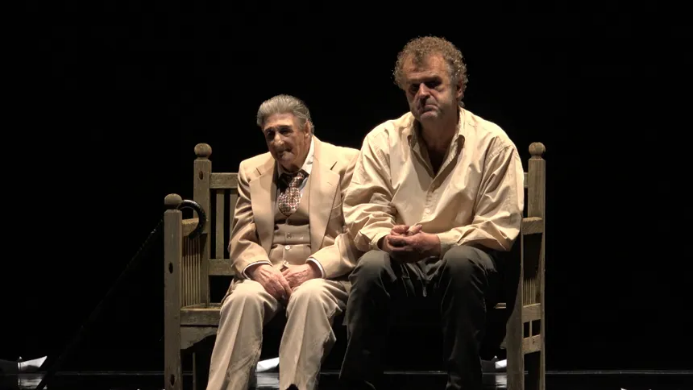
This film tells the extraordinary and true story of Bobò, a deaf-mute, illiterate, and microcephalic man who lived for 46 years in the Aversa mental asylum. His life takes an unexpected turn when he meets Pippo Delbono, who discovers him during a visit to the facility and is deeply moved. From that moment, a human and artistic bond is born that will change their lives forever.
Through this encounter, Bobò—until then invisible to the world—becomes a central figure in Delbono's theater and cinema, revealing himself as a surprising performer, capable of communicating with power and poetry even without words. His presence redefines the director's artistic language, transforming his way of telling, of looking, of creating.
Director Pippo Delbono
"I could never create a performance that wasn’t contaminated by my life."
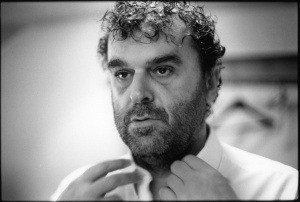
Pippo Delbono founded his company in 1986 with the actor Pepe Robledo. His aim was to put the world as it is on centre stage, in order to propose a transfigured vision of it that makes it possible to better understand it. Personal experiences, news items, narratives of life have enriched the Italian director's work. Influenced as much by Oriental theatre - which he practiced for a number of years - as by the choreographer Pina Bausch, he creates a theatre "of necessity", a theatre of truth, a theatre of body poetry that sometimes can take the form of a cabaret in which Pasolini and Beckett mingle with Tadeusz Kantor. His shows slip into all the cracks, in between all the contradictions of our society to break apart the imposed frames. There is rage, crudeness, provocation, but also an immense generosity in this imagined and invented work acted by a troupe that mixes professional actors and singular personalities who bring their poetic universe on stage. Simultaneously in the theatre and on its margins, Pippo Delbono throws light, in his way, on the world's complexities. Il Silenzio, Guerra and La Rabbia (2002), Enrico V and Urlo (2004), the Narratives of June (2006), were presented at the Festival d'Avignon.
Significant performances include: Guerra (1998), Urlo (2004), Questo Buio Feroce (2006), and La Gioia (2018). He is the recipient of prestigious European theatre awards, including the Europe Prize for New Theatrical Realities.
Besides theatre, Delbono has successfully delved into exploring cinematic language, directing hybrid documentaries and feature films. He made his debut with the film War (Guerra, 2003), a documentary shot during a tour in Israel and Palestine that won the David di Donatello award. His later works, such as La Paura (Fear, 2010), which he filmed on a mobile phone, and Sangue (Blood, 2013), have been screened at festivals in Locarno and Rome.
As an actor, he has had notable roles in internationally acclaimed films, such as I Am Love (2009) directed by Luca Guadagnino, where he performed side by side with Tilda Swinton.




.jpg)


.jpg)


